On Paradigms, Psychology, and the Pace of Human Insight
“Without clear principles to guide how we think and interpret experience, we risk mistaking theory for understanding.” — Inspired by William James (paraphrase)
🌍 The Day the Earth Refused to Sit Still
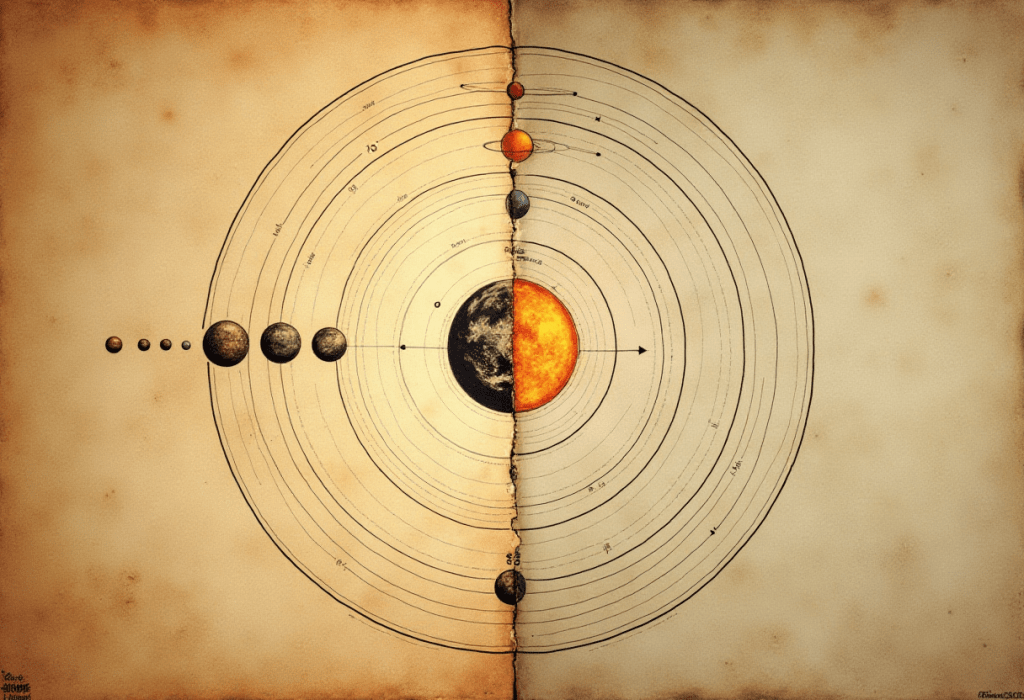
In 1543, Nicolaus Copernicus published De revolutionibus orbium coelestium, proposing that the Earth revolved around the sun.
It was not immediately celebrated.
In fact, it took over a century for the heliocentric model to gain significant traction. Galileo Galilei publicly supported it in the early 1600s and was placed under house arrest. It wasn’t until the late 1600s, through the work of Johannes Kepler and Isaac Newton, that the model became scientifically undeniable.
From proposal to widespread acceptance?
Roughly 150 years.
And even then, not everyone let go easily.
🧼 The Resistance to Washing Hands
In the mid-1800s, Ignaz Semmelweis noticed something extraordinary.
When doctors washed their hands before delivering babies, mortality rates plummeted.
His colleagues rejected him.
They were offended by the implication that they were causing harm. Germ theory had not yet been accepted. Even after Louis Pasteur and Joseph Lister advanced the science of microbes and antiseptic procedures, it took decades for handwashing and sterilization to become routine medical practice.
Again, we’re looking at 20–50 years before the obvious became standard.
Are We Slow Learners?
Maybe.
But I’m not sure that’s the whole story.
Paradigms don’t just change information.
They change identity.
“Whilst part of what we perceive comes through our senses from the object before us, another part (and it may be the larger part) always comes out of our own mind.”
William James, American philosopher and psychologist. Often dubbed the “father of American psychology.”
If the Earth moves, then we are not the center.
If germs cause disease, then we are responsible for unseen transmission.
Both required humility.
Both required letting go of certainty.
And both required insight — not just data.
Now, Psychology
Today, we are facing another quiet tension.
Despite unprecedented access to therapy, medication, and information, trends in anxiety, depression, and loneliness are not consistently declining. In many populations, they are rising.
This is not an attack on professionals. I have worked alongside many extraordinary clinicians. They care deeply.
But what if the model itself deserves examination?
What if we are still looking outward for the cause of something that is generated inward?
The understanding that human experience is created from the inside-out is not new. Variations of it have appeared in spiritual traditions for thousands of years. More recently, it has been articulated clearly in modern psychological language through the Three Principles understanding.
“We need to do better at implementing what we already know — bridging research, clinical practice, and real-world experience so that psychology genuinely improves lives.”
Attribution: General theme from leaders in psychology, e.g., research-practice integration discussions.
Those who see this deeply often report something remarkable:
- Less fear of their own experience
- Reduced reactivity
- Greater resilience
- A return to common sense
- A sense of agency rather than pathology
Not because they learned better coping strategies.
But because they realized how experience is being created moment to moment.
That kind of change does not come from theory.
It comes from insight.
What Really Forces Change?
History suggests it is not a debate.
It is not volume.
It is not pressure.
Change happens when enough people see something clearly for themselves.
Copernicus did not “win” an argument.
Semmelweis did not shame medicine into compliance.
Over time, reality became undeniable.
The question for us now is simple:
Are we willing to examine our assumptions about how human experience works?
“A great many people think they are thinking when they are merely rearranging their prejudices.”
William James, American philosopher and psychologist. Often dubbed the “father of American psychology.”
Not to dismantle what exists.
Not to disrespect professionals.
But to explore whether a deeper understanding could reduce suffering at its source.
Paradigm shifts rarely feel comfortable.
They feel disruptive.
Even threatening.
Until they don’t.
A Gentle Possibility
What if mental health is not something we build from the outside in?
What if it is something we uncover from the inside out?
What if insight, not management, is the real turning point?
History shows us something steady and reassuring:
Humanity eventually catches up with the truth.
Sometimes it takes decades.
Sometimes centuries.
But insight has a quiet way of winning.
Maybe the invitation is not to argue with the world, but to quietly examine our own assumptions. Where might you be standing on a model of understanding that deserves a second look?
Where have you accepted something as fixed that may simply be familiar?
Paradigm shifts do not begin in institutions. They begin in individuals who are willing to question gently, reflect honestly, and see freshly.
If history teaches us anything, it is this: insight is available to anyone willing to look.
The next shift may not require force. It may only require curiosity.
With respect, humility and love,


 Rick Ruppenthal | COACHING